Course contentsModule 3 of 8
Chemical Safety Awareness
GHS Labels and Hazard Pictograms
What each part of a workplace chemical label tells you, what the nine GHS pictograms signal, why a pictogram is only the start, and what to do when a container is not properly labelled.
In this module you will learn to
- Identify the parts of a workplace hazardous chemical label
- Recognise GHS hazard pictograms and the hazards they signal
- Explain why a pictogram alone is not enough to decide how to handle a chemical
- Know what to do with unlabelled, damaged or decanted containers
Why it matters
The label is usually the first safety information you meet, and often the only information within reach when you pick up a container. On a workplace hazardous chemical, the label is not marketing: its content is set by the WHS Regulations and uses the same signal words, pictograms and standard statements on every product, so once you can read one label you can read them all. In a few seconds a label can tell you that a product may catch fire, poison or burn the skin, and what the supplier says to do about it. It cannot do that if it is missing, worn away or on the wrong container, or if you stop reading at the picture. This module shows you how to read the whole label.
What a workplace label must show
Manufacturers and importers must label hazardous chemicals correctly as soon as practicable after making or importing them, and the business that uses, handles or stores them must make sure they stay correctly labelled at the workplace. The label is generally the first place to look to find out whether a chemical is hazardous, what its hazards are and how serious they are.
Under the WHS Regulations, a correctly labelled hazardous chemical has a label written in English that includes:
- the product identifier: the name or number used for the product, which must be the same as on its safety data sheet (SDS)
- the name, Australian address and business telephone number of the manufacturer or importer
- the identity and proportion of the ingredients that must be disclosed
- the hazard pictograms, signal word, hazard statements and precautionary statements that match the chemical's classification
- any other information about its hazards, first aid and emergency procedures not covered by those statements
- an expiry date, if the chemical has one
Where available, a label should also give an emergency phone number for poisons or treatment advice and a reference to the SDS, such as "Additional information is listed in the safety data sheet".
Four elements carry the hazard message. They are grouped together near the product identifier, which sits in the most prominent position, so you can find them quickly:
- Signal word: "Danger" for the more severe hazards, "Warning" for the less severe ones. A label shows only one: if "Danger" applies, "Warning" does not appear.
- Hazard pictograms: diamond-shaped symbols that show the type of hazard at a glance.
- Hazard statements: set sentences, such as "Toxic if swallowed", that describe the nature of each hazard and, where appropriate, how severe it is. Every relevant hazard statement must appear.
- Precautionary statements: the recommended measures to prevent or reduce harm, grouped as prevention, response (what to do if something goes wrong), storage and disposal, plus optional general statements such as "Read label before use".
A label, part by part
The label below belongs to a fictional product. Its label elements follow the hypothetical example in Safe Work Australia's Labelling Code. Choose a part in the key to highlight it on the label.
Flammosol
4 L
Contains:
- Aliphatic hydrocarbons 95%
- Toxicole 5%
DANGER
- Highly flammable liquid and vapour
- Toxic if swallowed
- Causes skin irritation
Prevention
- Keep away from heat, hot surfaces, sparks, open flames and other ignition sources. No smoking.
- Keep container tightly closed.
- Ground and bond container and receiving equipment.
- Wear protective gloves and eye and face protection.
- Do not eat, drink or smoke when using this product.
Response
- IF SWALLOWED: Immediately call a POISON CENTRE or doctor. Rinse mouth.
- IF ON SKIN (or hair): Take off immediately all contaminated clothing. Wash skin (or hair) with plenty of water.
- In case of fire: Use powder to extinguish.
Storage
- Store in a well-ventilated place. Keep cool.
Disposal
- Dispose of contents/container in accordance with jurisdictional regulations.
Madeup Chemical Company, 999 Chemical Street, Chemical Town, My State. Telephone: 1300 000 000
Additional information is listed in the safety data sheet.
Key to the label
The product's name, in the most prominent position. It must be the same on the SDS: that is how you match the two.
The identity and proportion of the ingredients that must be disclosed. "Toxicole" is an invented name from the Code's example.
"Danger", because at least one hazard is in a more severe category. With "Danger" on the label, "Warning" does not appear.
Flame (flammable) and skull and crossbones (toxic). There is no exclamation mark for the skin irritation: it is left off when the skull and crossbones applies.
What each hazard is and how severe: highly flammable, toxic if swallowed, irritating to skin. Every one that applies must appear.
The supplier's recommended measures, grouped by prevention, response, storage and disposal. They call for gloves and eye and face protection; the SDS says which kind.
The name, Australian address and business telephone number of the manufacturer or importer. Here, the Code's invented company.
A reminder that the SDS holds more detail. Read it together with the label.
The nine GHS pictograms
The GHS has nine hazard pictograms for physical, health and environmental hazards. Each is a black symbol on a white background inside a diamond, a square standing on one point, with a red border, or a black one, wide enough to see clearly. Which pictograms appear depends on the chemical's classification, and the label must show every relevant one, except where the rules of precedence described in the next section leave one out.
The nine pictograms and what they signal
Each pictogram is shown with its name, its GHS code and the hazards it signals. Learn the names: labels, safety data sheets and training all use them.
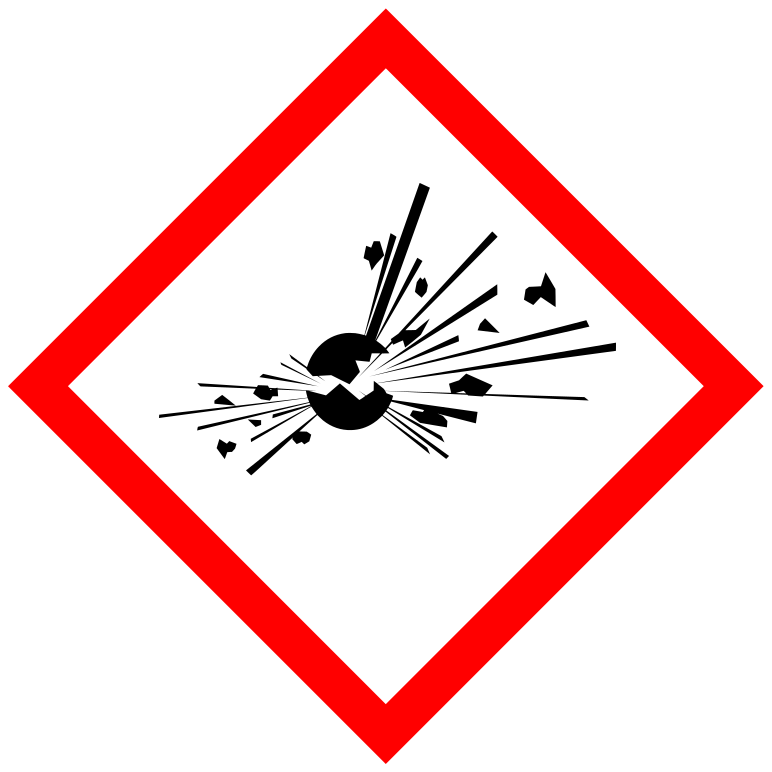
Exploding bombGHS01
Physical hazards
Explosives, including unstable explosives, and the self-reactive substances and organic peroxides most likely to explode.

Gas cylinderGHS04
Physical hazards
Gases under pressure, which can explode if heated or, if refrigerated, cause cryogenic (cold) burns.

FlameGHS02
Physical hazards
Flammable gases, liquids and solids and flammable aerosols; chemicals that heat up or catch fire on their own, or give off flammable gas in contact with water; most self-reactive substances and organic peroxides.
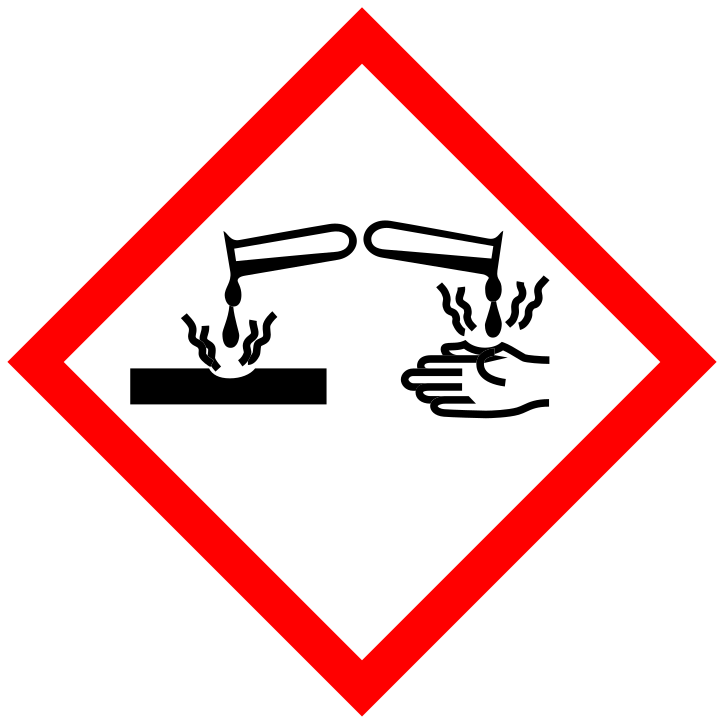
CorrosionGHS05
Physical and health hazards
Chemicals that cause severe skin burns or serious eye damage, and chemicals that are corrosive to metals.

Flame over circleGHS03
Physical hazards
Oxidising gases, liquids and solids, which can cause or intensify a fire by providing oxygen.
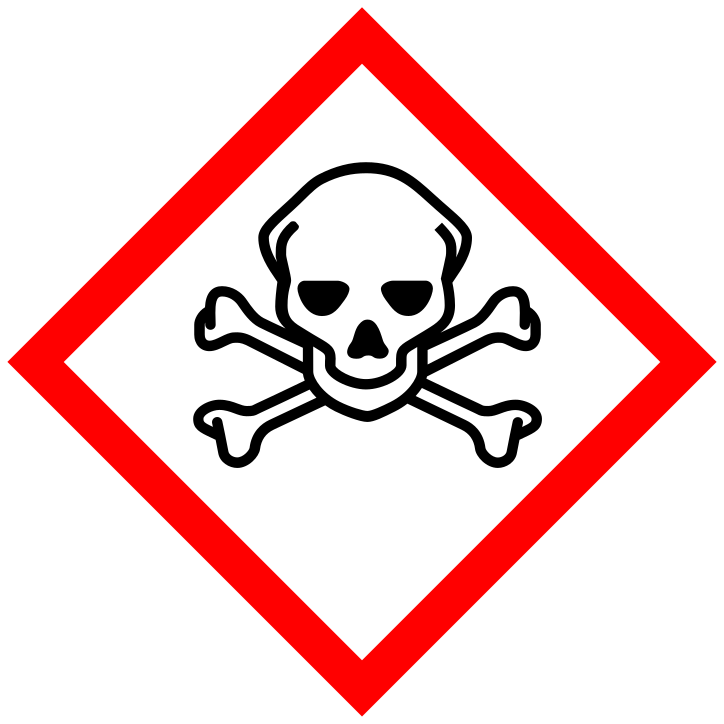
Skull and crossbonesGHS06
Health hazards
Severe acute toxicity: fatal or toxic if swallowed, in contact with skin or if inhaled.
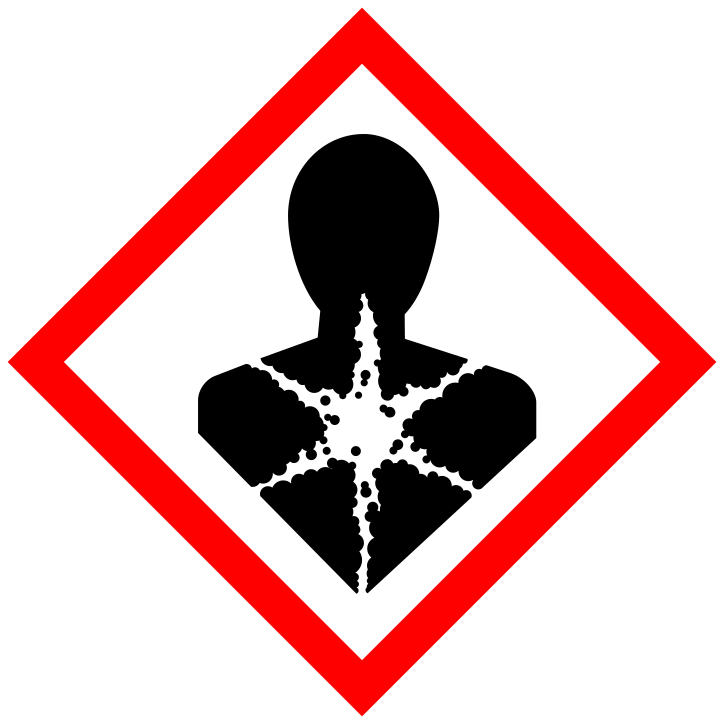
Health hazardGHS08
Health hazards
Serious, often long-term effects: may cause cancer or genetic defects, damage fertility or the unborn child, cause organ damage or allergy or asthma symptoms when breathed in, or be fatal if swallowed and it enters the airways.

Exclamation markGHS07
Health hazards
Less severe health effects: harmful if swallowed, in contact with skin or if inhaled; skin, eye or respiratory irritation; allergic skin reactions; drowsiness or dizziness.

EnvironmentGHS09
Environmental hazards
Hazards to the aquatic environment. Not required on workplace labels under WHS laws, but it may still appear.
The health hazard and exclamation mark pictograms are easy to confuse. The health hazard pictogram marks serious, often long-term effects, such as cancer, damage to fertility, organ damage and asthma-like allergy. The exclamation mark marks less severe effects, such as irritation, allergic skin reactions, drowsiness or dizziness. It does not mean "most urgent".
Some hazard categories have no pictogram at all. A flammable liquid in the lowest category, for example, carries the signal word "Warning" and the hazard statement "Combustible liquid" with no symbol. A label without a pictogram can still describe a real hazard.
Why a pictogram is not enough
A pictogram is designed to be recognised at a glance. That makes it a good alert and a poor instruction. Before you decide how to handle a chemical, read past it, for four reasons.
- One pictogram covers many hazards. The flame is used for flammable gases, liquids, solids and aerosols, and for chemicals that heat up or catch fire on their own or give off flammable gas when wet. The hazard statements say which applies.
- Severity is in the words. The flame looks the same on an "Extremely flammable liquid and vapour" labelled "Danger" as on a "Flammable liquid and vapour" labelled "Warning". The skull and crossbones is used for both "Fatal if swallowed" and "Toxic if swallowed".
- Not every hazard gets its own pictogram. Under the rules of precedence, the exclamation mark is left off when the skull and crossbones applies, and also for skin or eye irritation when the corrosion pictogram applies. A product can irritate your skin without showing an exclamation mark: the hazard statement tells you.
- The precautions are in the statements and the SDS. A pictogram says nothing about what to do. Precautionary statements give the supplier's recommended measures, often in general terms such as "Wear protective gloves". The SDS gives the detail, for example which glove material, and your workplace procedure says what to use for your task.
Gloves show why this matters. Some gloves resist some solvents but not others, so the right glove depends on the chemical and the task, not on the symbol. The same is true of eye protection, ventilation and storage.
That is why Safe Work Australia's guidance is to read the label together with the SDS, and why the information and training a business gives its workers should cover what each part of the label means. Some labels carry less than the full set of information, such as those on very small containers, and those on agricultural and veterinary chemicals, which may leave out the pictogram and signal word but must still give hazard and precautionary statements. Read the SDS as well.
Decanted, damaged and unlabelled containers
Many labelling problems start after delivery, when a chemical is poured into another container or a label wears off.
Decanting means transferring a chemical from its correctly labelled container into another container at the workplace, such as a spray bottle, a bucket or a smaller can. If the decanted chemical will not be used immediately, or is passed to someone else, the new container must be labelled. At a minimum, the label must be in English and show the product identifier and a hazard pictogram or hazard statement that matches the chemical's classification.
A decanted chemical counts as used immediately only when all three of these are true:
- the person who decanted it does not leave it unattended
- it is used only by a person who was there when it was decanted
- the container is emptied and cleaned straight after use, as if it had never held the chemical
Anything else needs a label, including a bottle left half full on a trolley at the end of a shift. A container refilled with the same product as part of normal work should carry a permanent label, and a container labelled for one chemical must be used only for that chemical. Containers of chemical waste must be labelled too. Labels belong on the body of the container, not the lid, which can be swapped or lost.
If nobody knows what a container holds, it should be clearly marked, for example "Caution: do not use, unknown substance", and kept apart while the business tries to identify it. If it cannot be identified, it is disposed of under the relevant environmental and waste rules, not tipped into a waste drum with other chemicals, where it could react.
Key terms
- Product identifier
- The name or number that identifies a product on its label and SDS. The two must match.
- Signal word
- "Danger" or "Warning", showing the relative severity of the hazard. A label shows only one.
- Hazard pictogram
- One of nine GHS symbols in a red-bordered diamond that show the type of hazard at a glance.
- Hazard statement
- A set sentence describing the nature of a hazard and, where appropriate, its degree, such as "Causes severe skin burns and eye damage".
- Precautionary statement
- A set sentence recommending how to prevent or reduce harm, grouped as prevention, response, storage, disposal or general advice.
- Decanting
- Transferring a chemical from its labelled container into another container at the workplace. The new container needs a label unless the chemical is used immediately.
Workplace examples
Council parks and gardens
A council parks team receives a new herbicide for weed control along footpaths. The team leader notices its label looks different from most chemicals in the depot: there is no pictogram and no signal word. Rather than assume it is harmless, she checks. Agricultural and veterinary chemicals are labelled under their own national rules, and their labels may leave out the pictogram and signal word, but they must still carry the hazard and precautionary statements, set apart in a separate box. She finds that box, reads the statements together with the SDS, and briefs the crew on the precautions before the first job.
Boat maintenance yard
At a marina's maintenance yard, workers pour solvent cleaner from a 20 L drum into smaller cans for each job. Some cans were being left on the slipway half full at knock-off without labels, and one was later found holding fuel. The yard manager sets aside a few cans for the solvent only and fits each with a permanent label showing the product identifier, the pictograms and the hazard statements from the drum. The manager explains to the team that a labelled can holds that solvent and nothing else, and that a can left for later must carry its label, because the chemical has not been used immediately.
What would you do? 1
You work in a café. A new descaler for the coffee machine arrives. Its label shows the corrosion pictogram, the signal word "Danger" and the hazard statement "Causes severe skin burns and eye damage". Your manager says the old descaler had the same symbol, so the rubber gloves under the sink will do.
What would you do? 2
At a plant nursery, you are asked to fill a spray bottle with bench cleaner from a 5 L container on the chemical shelf. Water damage has made most of the label unreadable. You can make out part of the product name, which looks like the cleaner you used last month, but not the pictograms or statements.
In your workplace
Labelling duties come from the WHS Regulations or, in Victoria, the OHS Regulations, and what appears on each label depends on how the product is classified. Find out which chemicals you use, where their SDS are kept, and what your workplace procedure says about decanting: which containers to use, how they are labelled and who labels them. Before you use a chemical, read the whole label, not just the pictogram. If a label is missing, damaged or unreadable, or does not match the SDS, stop and tell your supervisor or health and safety representative. Your state or territory regulator publishes guidance on labelling.
Key takeaways
- A workplace label must show the product identifier, Australian supplier details, ingredients, and the pictograms, signal word and statements that match the chemical's classification.
- "Danger" marks more severe hazards than "Warning"; a label shows only one.
- The nine GHS pictograms show the type of hazard at a glance; the statements give its nature, severity and precautions.
- Read the label together with the SDS before deciding how to handle a chemical or what protection to use.
- Decanted chemicals not used immediately need a label; containers with missing or unreadable labels are set aside and reported, not used.
Practice questions
Not graded and not saved. The answer and its explanation appear as soon as you check. The assessment uses different questions.
Sources
- Model Code of Practice: Labelling of workplace hazardous chemicals — Safe Work Australia, November 2026Sections 1.2, 1.3, 2.1, 2.2, 2.4–2.6, 3.1, 3.3, 3.8, 3.10, 4.3, 5.1 and 5.2; Appendices D–H
- Model Code of Practice: Managing risks of hazardous chemicals in the workplace — Safe Work Australia, November 2026Sections 2.2, 2.3, 4.1 and 4.4
- Model Code of Practice: Preparation of safety data sheets for hazardous chemicals — Safe Work Australia, November 2026Section 3.8
- Adoption of GHS 7 — Safe Work Australia
Parts of this module adapt Safe Work Australia material licensed under CC BY 4.0.
Sources last checked 22 November 2026. Always follow the SDS for the product you use, your workplace procedures and your state or territory regulator.